
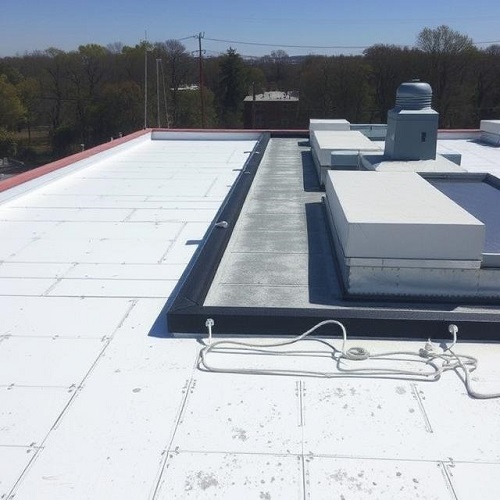
Do you know the recommended slope for a concrete flat roof is 1:40 to 1:60? That is, a drop of 1 inch for every 40-60 inches of roof length. This statistic exemplifies that a sloped roof is not actually flat! For optimal roof waterproofing and heat-proofing, maintain the bend perfectly before a coat.
In Pakistan, building construction firms implement various international standards, including UBC, IBC, and ACI. They serve as benchmarks when designing new structures, especially in major cities such as Karachi, Lahore, Islamabad, and others. According to statistics, 60% of building maintenance costs are linked to non-standard waterproofing.
WHY IS SLOPE NECESSARY?
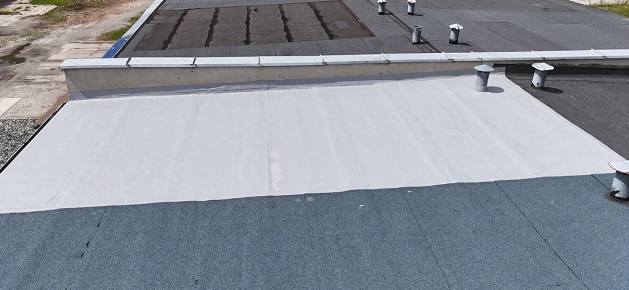
A sloped roof became a prominent requirement for safe construction. It can be achieved with framing and concrete substrates. Lightweight mortar is also a good option. From a heat-proofing perspective, a sloped roof helps distribute sunlight more evenly, preventing heat concentration in specific areas. On the other hand, an ineffective slope design can lead to ponding, the accumulation of liquid water in a certain area.
Benefits of Slope Design
- Protects waterproofing membranes
- Reduces structural stress
- Improve roof efficiency
- Increases energy efficiency
Let’s study in detail:
1. Prevent Water Ponding and Ensure Drainage
One of the primary functions of the roof slope is to facilitate positive drainage, which means water runs off quickly instead of lingering on the surface. Building codes, such as the International Building Code (IBC), require a minimum design slope of at least ¼ inch per foot (≈ 1:48 or 2 %) for low-slope roofs.
A minimum slope of 2 % (≈ 1:50) or more is required for waterproofing systems to avoid ponding.
Why this matters: Inadequate slope means water stays longer on the roof, infiltrates seams or membrane joints, causes damage, and can even lead to leaks inside. For waterproofing to function properly, the substrate should not be saturated or loaded with standing water.
2. Protect Waterproofing Layers and Materials
The waterproofing system, membranes, coatings, and sealants rely on dry conditions and not under constant hydraulic or structural stress. With the slope directing water to drains quickly, the membrane remains in better condition, and warranties by manufacturers tend to assume effective drainage. Hence, a well‐designed slope helps extend the lifespan of the waterproofing system.
3. Enhancing Heat Proofing and Thermal Performance
While slope is discussed in the context of drainage, it also affects how the roof handles heat and insulation: A sloped roof encourages faster drainage, which means less residual moisture in the roof structure. Moisture in insulation or deck can degrade thermal resistance (R‐value) and increase heat gain.
Slope allows the inclusion of adequate insulation and forms part of the “warm roof” or “inverted roof” designs, improving heat proofing by maintaining the thermal layers properly aligned. Surfaces that remain wet or shaded due to ponding will absorb more heat, trap moisture, and increase thermal stress on membranes, thus reducing heat-proofing performance.
Tip for Pakistan CONSTRUCTION AND WATERPROOFING COMPANIES
Given our monsoon rainfall and occasional heavy downpours, it’s prudent to design for a slope toward the higher end of the range, and to ensure drainage outlets are clear, protected, and adequate for peak water flow.
USEFUL LIFE OF A SLOPED ROOF
In cities like Karachi, Lahore, and Islamabad, where roofs face intense sunlight, heat, and heavy monsoon rains, a well-sloped waterproofing system can last 20–25 years, while a flat or poorly drained roof may see failure within 5–10 years. Regular inspection and re-coating every 5–7 years can extend life further.
If you want to ensure a long-lasting concrete roof with no water leakage issues, get an optimal slope constructed.
To ensure the best results, contact AllClearWaterproofing today!